
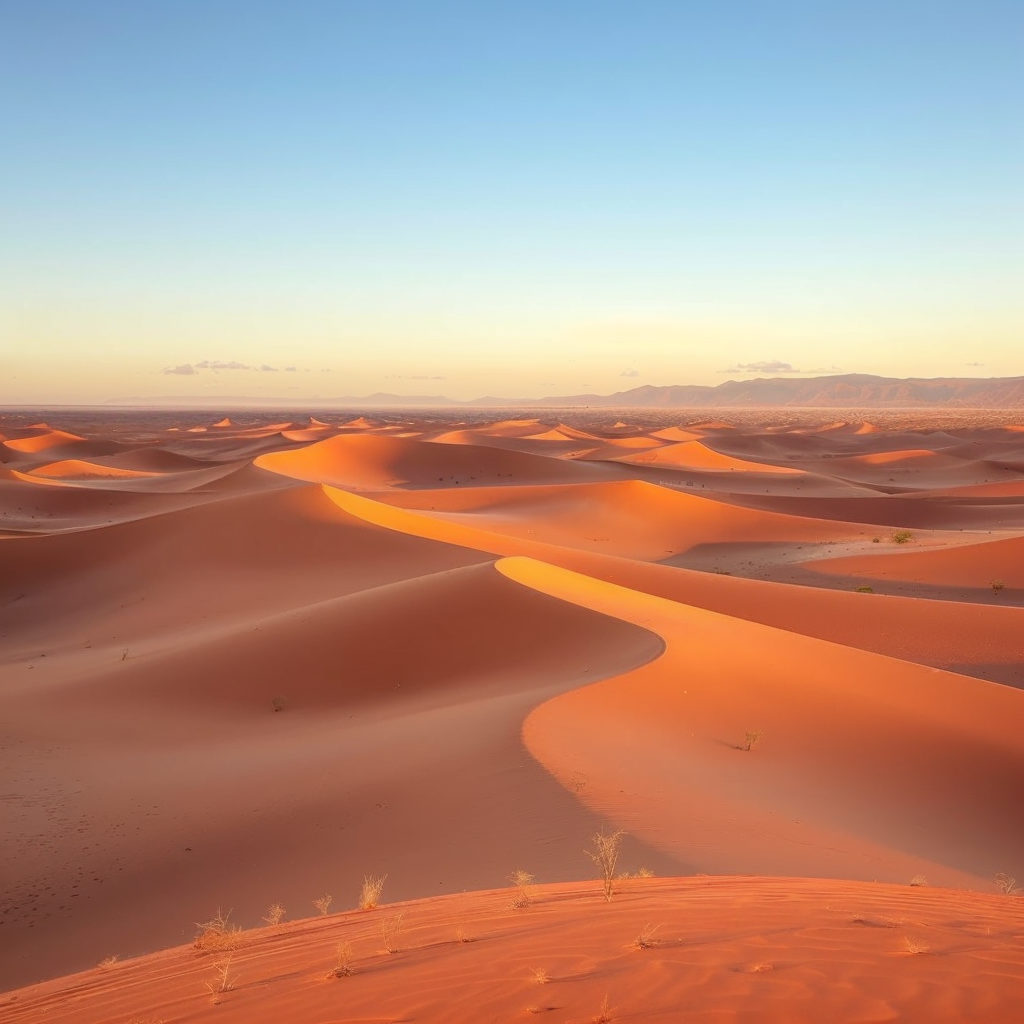
When most people think of deserts, they picture endless sand dunes, harsh heat, and an almost complete lack of life. However, the Kalahari Desert, located in southern Africa, is a strikingly different kind of desert. Though it experiences high temperatures and long dry spells, the Kalahari is not just a barren wasteland but a unique ecosystem full of life. It is home to fascinating flora and fauna specially adapted to survive the challenging conditions of this semi-arid desert.
Flora of the Kalahari
The Kalahari Desert’s vegetation is diverse and surprisingly lush in many areas, thanks to its sandy but nutrient-rich soil. After the rains, the desert landscape bursts into life, creating a colorful tapestry of plants that sustain the ecosystem.
- Camel Thorn Tree (Vachellia erioloba): One of the most iconic plants of the Kalahari, the camel thorn tree is vital to the survival of both the animals and the people in the region. Its deep roots tap into underground water sources, allowing it to thrive in the arid environment. Its seed pods and leaves provide food for herbivores like giraffes, while its dense canopy offers much-needed shade.
- Shepherd’s Tree (Boscia albitrunca): Known for its gnarled bark and small, dense leaves, this tree is another essential player in the Kalahari’s ecosystem. It provides shelter for animals, and its roots are sometimes used by locals to extract water. The tree’s leaves and fruit are also a key food source for wildlife.
- Devil’s Claw (Harpagophytum): This peculiar-looking plant, named for its claw-like fruits, has adapted to the desert by growing long taproots. It is also known for its medicinal properties, and locals have used it to treat a variety of ailments.
- Tsamma Melon (Citrullus lanatus): The Tsamma melon, a wild ancestor of the cultivated watermelon, thrives in the Kalahari and plays an essential role in the diet of many desert-dwelling animals. It stores water in its flesh, making it a vital source of hydration during the dry months.
Fauna of the Kalahari
The animal life of the Kalahari is as unique as its plant life. Many species have developed remarkable adaptations to survive in the harsh environment, creating a fascinating web of life.
- Kalahari Lions: The famous black-maned lions of the Kalahari are larger than their counterparts in other regions. They have adapted to the desert’s extreme temperatures and long distances between water sources. These lions are skilled hunters, often preying on large animals like gemsbok and wildebeest, but they can go for long periods without water by obtaining moisture from their prey.
- Meerkats: These small, social animals have captured the hearts of many with their playful antics. Meerkats live in large colonies and are highly cooperative, taking turns to stand on guard for predators while others forage for insects and small animals. Their keen survival skills and ability to thrive in such a harsh environment make them one of the most famous inhabitants of the Kalahari.
- Gemsbok (Oryx): With their striking long horns and elegant appearance, gemsbok are well adapted to life in the desert. They can withstand extreme heat and have developed a unique ability to reduce their water loss, allowing them to go without drinking for long periods. They feed on dry grasses and plants but can also dig for roots to extract moisture.
- Kori Bustard: The Kori bustard is one of the largest flying birds in the world and is a common sight in the Kalahari. These birds are well adapted to desert life, often feeding on insects, small animals, and even berries. Their impressive size and graceful movements make them an iconic part of the Kalahari’s wildlife.
- Brown Hyenas: Unlike their more famous spotted cousins, brown hyenas are much rarer and have developed some unique adaptations to desert life. They are scavengers, often feeding on the leftovers from other predators, and have a highly developed sense of smell, allowing them to find food in vast areas of the desert.
Adaptation and Survival
The flora and fauna of the Kalahari Desert have thrived due to their remarkable ability to adapt to the challenging conditions. Some plants have deep taproots to access underground water, while animals like the meerkat and gemsbok have evolved behaviors and biological traits that allow them to survive long stretches without water.
While the desert may seem harsh and unwelcoming, it is a place of resilience and life. The Kalahari’s flora and fauna paint a picture of a delicate balance between the challenges of the environment and the ingenuity of nature.
Conclusion
The Kalahari Desert is far more than just a vast expanse of dry land. It is a thriving ecosystem filled with plants and animals uniquely suited to their environment. Visiting the Kalahari offers a glimpse into the wonders of nature’s adaptations and the beauty that can be found even in the harshest of landscapes. If you’re a lover of wildlife and nature, the Kalahari Desert is a must-see destination, offering an unforgettable experience of some of Africa’s most unique flora and fauna.
Explore our Activities

Hiking (4 Trips)
Sightseeing (5 Trips)

Travel (5 Trips)

Shark Cage Diving (4 Trips)
Whale Watching (2 Trips)

Sailing Experience (6 Trips)

Places to Stay (4 Trips)
Game Drive (1 Trip)

Eco Tourism (4 Trips)